


Exploring Japan in Winter: Day Trips from Tokyo and Regional Getaways
Winter in Japan offers a variety of escapes easily accessible by train from Tokyo, from mountain regions famous for heavy snowfall to coastal cities and historic post towns. Travelers can visit traditional hot spring clusters, explore preserved castle districts, or enjoy outdoor activities like skiing and snowshoeing. Each place provides unique regional cuisine and experiences suited to both adventurous travelers and those looking for a place to disconnect and recharge.
Easy Winter Day Trips from Tokyo
1. Yuzawa (Niigata Prefecture)
Nicknamed “Snow Country,” Yuzawa sits in southern Niigata. The area grew as a post town during the Edo period along routes linking Echigo (Niigata) with the Kantō region and later became a major winter retreat with the arrival of ski resorts and direct shinkansen access.
🚄 How to get there:
From Tokyo, take the Jōetsu Shinkansen to Echigo-Yuzawa Station in about 75–90 minutes. The station is located in the town center, so there's no need for additional transfers to reach ski areas, ryokan, or onsen.
♨️ Things to do:
Yuzawa is surrounded by ski resorts offering runs for all skill levels, with snow season typically lasting from December through April. Beyond skiing, the town is known for its hot springs, including outdoor rotenburo baths at local inns.
Day visitors can also enjoy public bathing options, such as the sake-infused bath at Ponshukan inside Echigo-Yuzawa Station. Takahan Ryokan, where novelist Yasunari Kawabata stayed while writing Snow Country, includes a small museum connected to the author and the area’s literary legacy.
🍜 Cuisine and local specialties:
Niigata is famous nationwide for its excellent rice and sake. Ponshukan, located within the station, allows visitors to sample a wide range of local brews, while nearby restaurants accompany Koshihikari rice with local vegetables, river fish, and seafood.

2. Chichibu (Saitama Prefecture)
Nestled in the mountains of western Saitama, Chichibu has been long known as a religious center and post town (shukuba) born during the Edo period, closely tied to pilgrimage routes such as the Chichibu 34 Kannon Pilgrimage.
🚄 How to get there:
From Ikebukuro Station, take the Seibu Red Arrow limited express to Seibu-Chichibu Station (about 80–90 minutes).
♨️ Things to do:
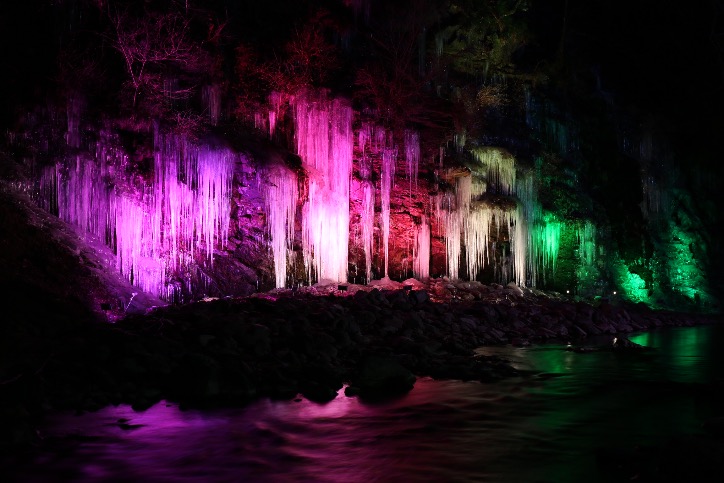
Between January and February, the Misotsuchi Icicles form in the Okuchichibu Valley, a 10-meter-tall, 30-meter-wide natural ice wall created by spring water freezing along the rock face. Ashigakubo and Onouchi are other two icicle sites. Other popular sites include Chichibu Shrine, Mitsumine Shrine high in the mountains and Hashidate Limestone Cave.
🍜 Cuisine and local specialties:
Chichibu is known for waraji-katsu, oversized pork cutlets coated in a sweet-savory sauce and served over rice (named after waraji, straw sandals, due to its shape). Miso-based dishes and locally brewed sake are also common in winter meals.
3. Karuizawa (Nagano Prefecture)
Located at the base of Mount Asama, Karuizawa began as a post town along the Nakasendō route between Edo and Kyoto, before evolving into one of Japan’s earliest resort towns in the late 19th century. Its association with foreign missionaries, diplomats, and Japanese elites shaped its Western-influenced character.
🚄 How to get there:
From Tokyo Station, take the Hokuriku Shinkansen to Karuizawa Station in just over one hour.
♨️ Things to do:
The area is well known for its ski resorts, particularly Karuizawa Prince Hotel Ski Resort, located directly next to the station, or enjoy quieter activities such as strolling through Kyu-Karuizawa Ginza, visiting museums, cafés and bookstores around Harunire Terrace.
Natural sights like Kumoba Pond and Shiraito Falls remain accessible year-round. Architectural landmarks such as St. Paul’s Catholic Church, Karuizawa Kōgen Church and the Stone Church reflect the town’s diverse cultural past. Prince Shopping Plaza, located next to the station, offers an open-air outlet surrounded by greenery and ponds.
🍜 Cuisine and local specialties:
Dining reflects Karuizawa’s international origin, with European bakeries and cafés, Western restaurants alongside Japanese traditional cuisine. Local highlights include Shinshu soba, dairy products, and jams.

Winter Weekend Getaways
1. Toyama City (Toyama Prefecture)
Facing the Sea of Japan and backed by the Northern Japan Alps, Toyama was historically a prosperous castle town of the Maeda clan during the Edo period and later became an important regional hub for trade, medicine, and industry.
🚄 How to get there:
From Tokyo, take the Hokuriku Shinkansen to Toyama Station in about 2–2.5 hours.
♨️ Things to do:
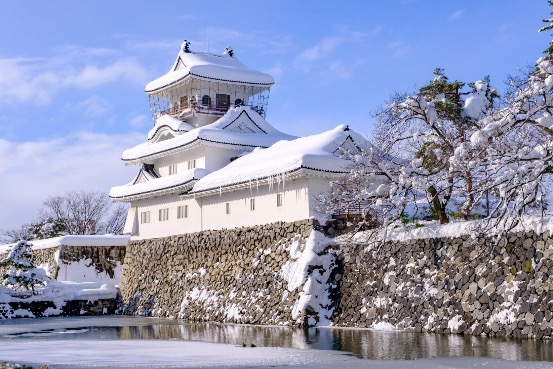
Within the city, visitors can explore Toyama Castle Park, walk along the Matsukawa River or Kansui Park, or spend time indoors at the Toyama Glass Art Museum, known for both its architecture and exhibitions. On clear days, views of the Tateyama range dominate the skyline.
Toyama works well as a base for nearby destinations such as the Tateyama Kurobe Alpine Route, the Gokayama villages (Ainokura or Suganuma), UNESCO World Heritage sites, and coastal spots along the Sea of Japan.
🍜 Cuisine and local specialties:
Toyama Bay seafood is the main draw, especially winter yellowtail (kan-buri), red snow crab, and firefly squid. Sushi and seafood rice bowls (kaisendon) are consistently high quality. Another popular dish is Toyama Black Ramen, a soy sauce based ramen with an inky-black broth.
2. Nyūtō Onsen (Akita Prefecture)
Deep in the mountains of Akita, Nyūtō Onsen is a small cluster of traditional hot spring inns scattered around Mount Nyūtō, an area long known for its therapeutic waters. With over 350 years of history, several ryokan trace their origins back to the Edo period, when travelers and samurai came here for rest and recovery.
🚄 How to get there:
From Tokyo, take the Akita Shinkansen Komachi to Tazawako Station (about 3 hours), then transfer to a local bus to the Nyūtō Onsen area (around 50 minutes).
♨️ Things to do:
The main activity is onsen hopping (yu-meguri): seven traditional inns are scattered through the woods, each drawing from its own natural spring. Visitors can purchase a Nyūtō Onsen Hopping Passport, which allows access to all seven baths (Tsurunoyu, Taenoyu, Ganiba, Ogama, Magoroku, Kuroyu, and Kyukamura), each with distinct water properties and settings.
🍜 Cuisine and local specialties:
Meals at Nyūtō Onsen focus on hearty mountain cuisine, well suited to winter. A signature dish is kiritanpo nabe, a hotpot made with pounded rice sticks, seasonal vegetables, and local broth. Winter menus often feature preserved mountain vegetables (sansai) and freshwater fish, typically served as multi-course meals (kaiseki).

3. Aomori City (Aomori Prefecture)
Located at the northern tip of Honshū, Aomori started as a port town and later as a key transportation hub linking Honshū and Hokkaidō. Today, it is best known for its heavy snowfall; Aomori consistently ranks among the world’s snowiest cities, with average annual snowfall of around 793 cm (312 inches).
🚄 How to get there:
From Tokyo, take the Tōhoku Shinkansen directly to Shin-Aomori Station (about 3 hours), then transfer to a local train or bus to Aomori Station (5–15 minutes). Or a ~1 hour 20 min flight from Haneda Airport.
♨️ Things to do:
The waterfront around Aomori Bay offers snowy seaside walks with views toward the Tsugaru Peninsula. For a classic winter excursion, many visitors head to the nearby Hakkōda Mountains for snowshoeing or ropeway rides.
Sukayu Onsen, located at the foot of Mount Hakkōda, is one of the area’s best-known attractions, famous for its historic mixed-gender bath and being the snowiest inhabited place on Earth. Within the city, indoor options include the Aomori Museum of Art and the ASPAM building’s observation deck.
🍜 Cuisine and local specialties:
Aomori is Japan’s largest producer of apples, and apple sweets, juices, and ciders are widely available. Seafood is equally central, with scallops, squid, and tuna. At Furukawa Fish Market, visitors can make a nokkedon by choosing sashimi toppings stall by stall. Another local dish is jappa jiru, a warming miso-based soup made from cod scraps, tofu, and vegetables, traditionally eaten as a way to avoid waste during the colder months.

Less-Known Towns & Prefectures
1. Aizu-Wakamatsu (Fukushima Prefecture)
Located in western Fukushima Prefecture, Aizu-Wakamatsu developed as a prominent castle town of the Aizu domain and is closely associated with the final years of the Edo period and the Boshin War. This history remains visible throughout the city in its preserved architecture, cultural sites, and traditional industries.
🚄 How to get there:
From Tokyo, take the Tōhoku Shinkansen to Kōriyama Station (about 1 hour and 20 minutes), then transfer to the Ban’etsu West Line to Aizu-Wakamatsu Station (around 1 hour).
♨️ Things to do:
Tsuruga Castle anchors the city and houses a museum focused on the region’s samurai past. Nearby, the Aizu Bukeyashiki samurai residences offer insight into domain-era life, while Nanokamachi preserves rows of traditional storehouses now home to cafés and local craft shops.
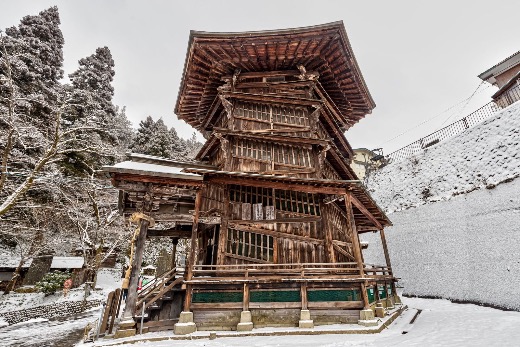
Sazae-dō, a rare wooden temple with a double-helix interior ramp, is one of the city’s most distinctive landmarks. Higashiyama Onsen, set along the Yukawa River valley, provides a classic hot spring experience close to the city center. In winter, sake breweries and the Aizu Sake Museum offer seasonal tastings tied to the brewing calendar.
🍜 Cuisine and local specialties:
Aizu is known for high-quality sake, supported by cold winters and clean mountain water. Regional dishes include Aizu sauce katsudon, negi-soba from nearby Ōuchijuku (buckwheat noodles served with a long green onion used instead of chopsticks), and various mochi preparations enjoyed throughout the colder months.
2. Tsuruoka (Yamagata Prefecture)
Located in the Shōnai region of Yamagata Prefecture, Tsuruoka emerged as a coastal castle town tied to maritime trade and religious activity during the Edo period.
🚄 How to get there:
From Tokyo, take the Jōetsu Shinkansen to Niigata Station (about 2 hours), then transfer to the Limited Express Inaho to Tsuruoka Station (around 2 hours).
♨️ Things to do:
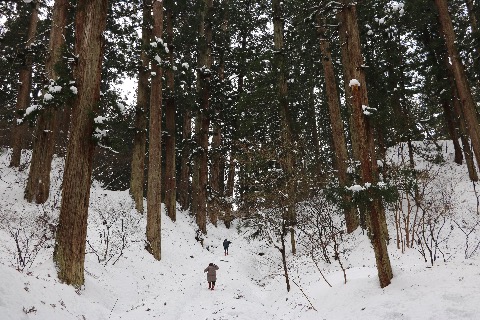
Tsuruoka is best known as a gateway to the Dewa Sanzan (The Three Sacred Mountains of Dewa). In winter, Mount Haguro is the focus, as it remains accessible year-round. Visitors can climb the 2,446 stone steps through cedar forest, passing the five-story Haguro Pagoda, a designated National Treasure.
Within the city, Tsuruoka Park preserves the former castle grounds. For indoor activities, Kamo Aquarium (reopening scheduled for April 2026) is known for its extensive jellyfish collection. There are also hot spring towns nearby, including Atsumi Onsen and Yutagawa Onsen.
🍜 Cuisine and local specialties:
Tsuruoka is recognized by UNESCO as a City of Gastronomy. The region is known for Shōnai dentō yasai, heirloom vegetables used in seasonal dishes, along with seafood from the Sea of Japan and fermented foods suited to winter. Buddhist vegetarian cuisine (shōjin ryōri) and locally brewed sake are also part of the area’s food culture.
3. Matsue (Shimane Prefecture)
Often called the “City of Water,” Matsue sits between Lake Shinji and the Sea of Japan and functioned as a castle town during the Edo period. The city retains key elements of its historical layout, including preserved samurai residences, temple districts, and the Shiomi Nawate area near the castle. Matsue is also closely associated with tea ceremony culture and was home to Lafcadio Hearn, who lived here in the late 19th century and documented local customs and folklore.
🚄 How to get there:
From Tokyo, take the Tōkaidō–Sanyō Shinkansen to Okayama (about 3.5 hours), then transfer to the Limited Express Yakumo to Matsue Station (around 2.5 hours). Alternatively, flights from Tokyo Haneda to Izumo Airport take about 1 hour and 15 minutes, followed by a 30-minute bus ride.
♨️ Things to do:
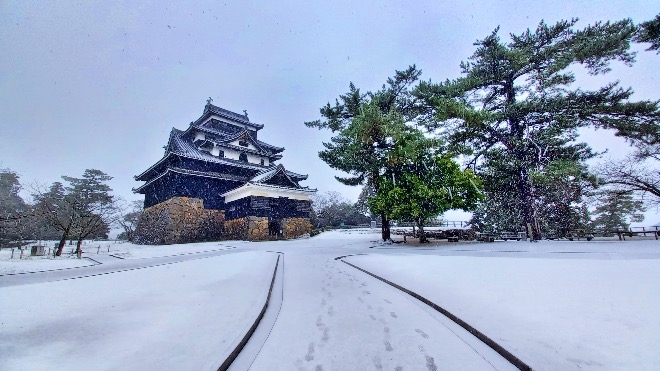
Matsue Castle is one of Japan’s few remaining original wooden castles, and its surrounding moat can be explored via the Horikawa Sightseeing Boat, which has heated kotatsu tables in winter. Shiomi Nawate Street preserves part of the former samurai quarter and includes the Lafcadio Hearn Old Residence museum.
Indoor options include the Shimane Art Museum along Lake Shinji and Matsue Vogel Park, a large greenhouse complex. A short trip from the city center leads to Tamatsukuri Onsen, one of Japan’s oldest hot spring areas.
🍜 Cuisine and local specialties:
Winter highlights Matsue’s regional food culture, particularly shijimi clams from Lake Shinji, seasonal seafood, crab dishes, and locally brewed sake. Izumo soba, traditionally served in stacked lacquered bowls (warigo soba), is a local staple, alongside wagashi linked to the city’s tea culture.
Winter Across Japan’s Regions

Taken together, these destinations show how winter travel in Japan extends beyond major tourist spots. Strong rail connections make it possible to experience snowfall, regional food traditions, and local history across prefectures throughout the country. Planned as day trips or longer stays, winter travel offers a clear opportunity to explore regional life and seasonal culture beyond Japan’s most familiar routes.
🧳 Stay Longer Than a Weekend
Winter trips show how different regions of Japan live and work during the colder months, but an internship in Japan lets you experience it over time, not just a few days. If you want to intern in Japan and see life beyond major cities, you can join our program or reach out to us to start planning a stay that goes beyond a short visit!


