


How Japanese Companies Handle Skill Development
Skill development has become a critical focus in Japan amid major demographic and economic shifts. An aging population and shrinking workforce have created persistent labor shortages, while businesses also face low productivity and rapidly changing skill needs in the digital age.
Traditionally, Japanese companies addressed skills through long-term internal development derived from the postwar employment system. Today, that model is at a crossroads, as firms seek to preserve its strengths while adapting to new realities. This post explores how Japan’s skill development model works, how it differs from Western approaches, and how it is evolving.
Japan’s Traditional Skill Development and Hiring Model
Japan’s traditional approach to skill development is built around long-term employment and internal training. Companies historically hired employees with the intention of retaining them for decades, developing skills in-house rather than sourcing talent from the external labor market. Under this model, employees were not expected to arrive fully prepared, but to grow gradually within the organization.
This approach is closely tied to Japan’s practice of potential-based hiring (ポテンシャル採用), particularly through the annual 新卒一括採用 (shinsotsu ikkatsu saiyō) system where large companies hire cohorts of new graduates each April, often without assigning a specific job at entry.
Instead of recruiting for immediate role readiness, firms prioritize attributes such as adaptability, attitude, and willingness to learn, assuming that technical skills can be developed internally. As a result, even students with degrees unrelated to the company’s industry are still considered viable hires.
Once inside the company, employees typically follow a generalist career path; many new hires enter as 総合職 (sōgō-shoku, general career track employees) and rotate through different departments (known as jinji-ido) during their early years. These internal transfers allow employees to build broad company knowledge and understand how different functions connect, an experience valued for future leadership and teamwork.
On-the-job training (OJT) forms the backbone of this system: employees learn by observing senior colleagues, assisting with tasks, and gradually taking on responsibility. Because firms assumed long-term employment, there was historically less emphasis on external courses or certifications. Formal off-the-job training existed, especially in large corporations, but it was generally supplementary to learning through daily tasks.
This internally focused model was most visible in large corporations, but its principles also extended to smaller firms. SMEs often relied on long-term retention and mentoring by owners or senior staff, developing skills through apprenticeship rather than formal programs.
The advantage of this system is strong alignment between employees and company culture, as well as a workforce that can adapt to changing internal needs. The downside is that early role placement can be uneven and specialized skills may be undervalued at the entry level. Despite these limitations, hiring for potential and developing talent internally remain foundational to how many Japanese companies structure training and career development today.
On-the-Job Training (OJT) as a Long-Term Investment
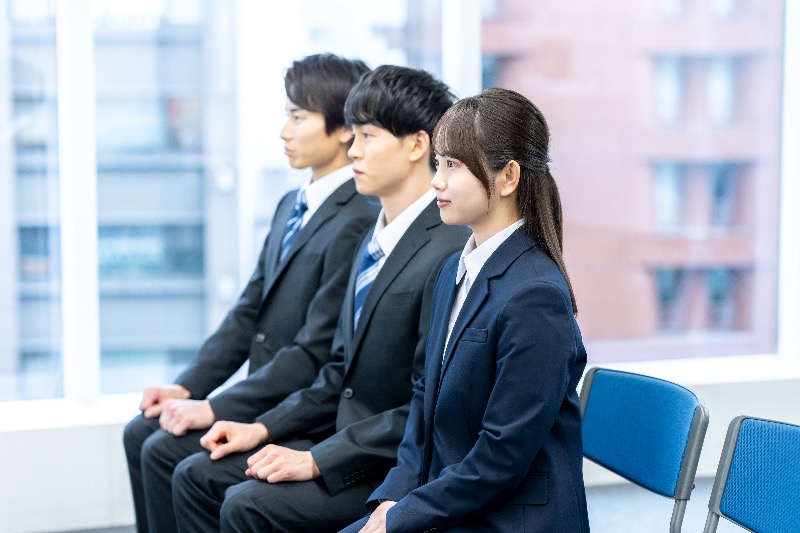
Once hired, skill development in Japanese companies is driven primarily through on-the-job training (OJT), which remains the core way employees learn their roles. Rather than relying heavily on external courses or certifications, companies implant learning directly into daily work. OJT is often paired with job rotation, particularly in large firms, where employees move between departments to build generalist skills and a broad understanding of company operations rather than narrow specialization.
Junior employees typically learn by working side by side with senior colleagues (先輩, senpai), absorbing not only technical skills but also communication styles, problem-solving approaches, and workplace etiquette. Japanese firms are known to spend significantly more time training new employees on the job than their Western counterparts; one study found that Japanese manufacturers provided nearly nine times more training hours in the first six months for new production workers than American firms.
What Companies Gain from an OJT-Centered Model
- Learning through practice: Employees contribute to work while developing skills rather than stepping away for instruction.
- Transfer of tacit knowledge: Skills that are difficult to formalize (judgment, timing, and handling of clients) are learned through observation.
- Broader skill development: Job rotation builds understanding beyond a single function.
- Individualized guidance: One-on-one mentoring adapts training to each employee’s pace.
- Lower early-career pressure: New hires are not expected to be fully productive immediately.
OJT is not without challenges; training quality can vary by supervisor, making outcomes dependent on mentorship, which is why many companies now evaluate managers partly on how well they develop subordinates. OJT also has limits when it comes to emerging or highly specialized skills, as traditional reliance on internal knowledge transfer can slow adoption of expertise developed outside the firm.
While the system can be slow and carries risk if employees leave mid-career, it produces workers who are deeply familiar with company operations and culture.

Skill Development in Japan and the West
Japan’s model of skill development differs markedly from Western systems, and these differences often surface in multinational workplaces. Broadly speaking, Western career development is more individual-driven, while Japan’s approach has traditionally been employer-driven.
Initiative for Skill Growth
In many Western countries, individuals are expected to actively manage their own skills, often pursuing external certifications, workshops, or degrees to remain competitive. Changing jobs is also a common way to gain new experience and increase pay. In Japan, the norm has been to join a company and rely on internal training and promotion, with outside study historically less common unless supported by the employer.
Evaluation and Career Progression
Western workplaces often emphasize individual performance and specialized expertise, with skill acquisition closely tied to promotions or job changes. In contrast, Japanese evaluations have traditionally placed more weight on teamwork, seniority, and steady improvement over time.
Mobility and Job Rotation
A key cultural difference lies in how mobility is viewed: in Western contexts, moving between companies or roles is seen as a healthy way to build skills, while internal job rotation can appear risky if it pulls someone away from their specialization. In Japan, changing companies was long viewed as a last resort rather than a growth strategy, and varied experience within one company is seen as an asset rather than a liability.
These contrasts help explain why Japan’s system can appear slow or rigid from a Western perspective, while frequent job-hopping and externally driven upskilling may seem unstable or misaligned with organizational needs in Japan.
Neither approach is inherently better; they reflect different assumptions about employment, loyalty, and how expertise develops over time. While the two models are gradually converging, these foundational differences continue to form expectations on both sides.

Productivity Pressure and Changing Skill Expectations
Japan’s labor pool is shrinking rapidly due to an aging population; by 2030, the working-age population is projected to fall to 92% of its 2020 level, and to just 68% by 2050. This has already caused serious labor shortages across sectors such as manufacturing and healthcare, and traditional hiring alone can no longer address the gap.
As retiring workers cannot be easily replaced, companies are being pushed to raise productivity with the workforce they already have. The impact is tangible: in 2024, a record 350 Japanese companies went bankrupt due to labor shortages. As a result, improving how each employee works has become essential, and skill development is now a key lever in Japan’s “do more with less” reality.
A major response has been increased investment in digital tools and automation, which in turn changes skill requirements. Companies are adopting AI, robotics, data analytics, and other productivity enhancing systems, but these tools are only effective if employees know how to use them. As a result, firms are placing greater emphasis on training workers to operate machines, interpret data, and manage digital workflows.
The government is reinforcing this push through its “Society 5.0” agenda and digital training subsidies. Public–private initiatives, particularly aimed at SMEs, are helping reduce cost barriers to digital adoption and make upskilling more accessible through national and local support.
Surveys show that 76% of managers in Japan believe a skills-based approach can improve productivity, innovation, and agility, and nearly half of companies report shifting away from seniority-based models toward skills-focused talent development. Labor shortages have also increased openness to foreign workers and older employees, prompting companies to invest in training these groups through language, cultural, and digital skills programs.
Overall, productivity pressure has transformed skill development from a long-term career concern into an operational necessity. In Japan’s current environment, effective upskilling increasingly determines whether companies remain competitive or fall behind.

What This Means for Foreign Employees
Japan’s approach to skill development has clear implications for the growing number of foreign nationals working in Japanese companies; Japan is opening itself to foreign workers in a way that prioritizes long-term contribution over short-term labor supply.
Recent policy changes reflect this focus on value rather than volume. A key example is the planned replacement of the Technical Intern Training Program with Employment for Skill Development (ESD), scheduled to begin in 2027. The new framework emphasizes defined training goals, improved working conditions, and clearer pathways into skilled, long-term roles, including transitions to statuses such as Specified Skilled Worker. The broader message is that foreign workers are expected to integrate into the core workforce rather than fill temporary gaps.
Within companies, foreign employees are generally valued for their willingness to learn internal processes, adapt to company-specific systems, and contribute over time; flexibility often matters more than fitting a narrowly defined job description from day one.
At the same time, foreign professionals bring capabilities that are increasingly scarce in the domestic talent pool, including specialized expertise, experience with skills-based or lateral career models, and cross-cultural communication skills.
These strengths are particularly useful as companies expand overseas operations, work with international partners, and adopt new digital tools. Many firms also note that more diverse teams encourage innovation and motivation which can positively affect overall employee engagement.
Japan has also adjusted immigration and residency policies to better retain skilled foreign talent, including longer visa durations, point-based systems, and clearer routes to permanent residency.

Where Skill Development in Japan Is Heading
Japan’s approach to skill development is entering a period of adjustment, driven by labor shortages, productivity pressure, and changing worker expectations. While the emphasis on internal training remains, several new directions are emerging.
One of the most visible shifts is the expansion of reskilling initiatives. In late 2022, the Japanese government committed ¥1 trillion (about $7.5 billion) over five years to workforce reskilling, with a strong focus on adult education, particularly in digital fields. Between 2023 and 2025, a government-backed program allows employees to take extended training leave while receiving 50–80% of their salary through employment insurance, making mid-career learning financially viable for more workers.
Companies are reinforcing this trend with internal initiatives, and large firms have begun rolling out organization-wide training programs focused on digital literacy and data skills. For example, Mitsui Chemicals announced plans to invest ¥100 billion by 2030 to train all employees, from basic digital skills to advanced AI applications.
Policy direction is also nudging companies toward more flexible hiring practices, including mid-career recruitment and easier movement across industries to bring in skills that cannot be developed quickly in-house. At the same time, the market for external training and credentials is expanding: Japan’s “recurrent education” sector, estimated at around $300 million and growing, includes short-term courses, microcredentials, and industry certifications offered by universities and private providers. While still smaller than in many Western countries, this marks a clear shift from Japan’s historically limited use of external education.
Longer-term change is also coming from the workforce itself; younger employees tend to be more digitally fluent, more open to job changes, and more focused on personal growth and work-life balance than previous generations. Having grown up as lifetime employment weakened, many are comfortable viewing skill development as an ongoing responsibility, even within a company-led system.
Taken together, these trends suggest that Japan is not abandoning its traditional model, but adapting it. Internal training, long-term development, and company loyalty remain important, while reskilling programs, external learning, and more flexible career paths increasingly supplement them.
Adapting Tradition to New Demands

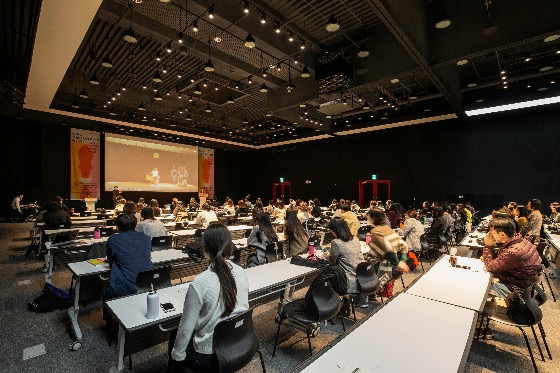
Japan’s traditional approach to skill development worked well during periods of stable growth, but it has faced increasing strain in recent years. Rather than dismantling the system, companies and policymakers are adapting it by introducing new practices while preserving core strengths, in order to respond (albeit in a uniquely Japanese way) to global economic pressures and the expectations of younger generations. In any case, the evolution of Japan’s skill development approach is a testament to its ability to adapt traditions to meet tomorrow’s needs.
🛠️ Build Your Skills in Japan
An internship in Japan gives you direct exposure to how training, adaptability, and growth work in practice inside Japanese companies. If you’re ready to build your skills, join the program or get in touch so we can help you find an internship that fits your goals!


