
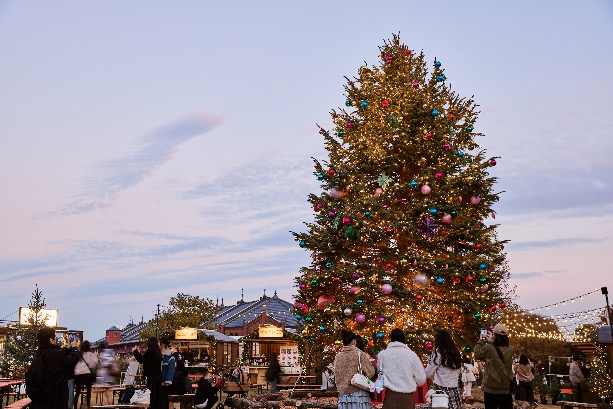

Christmas in Japan: Origins, Trends, and Local Traditions
Christmas in Japan is not a public holiday but a largely secular and optional celebration, influenced more by historical encounters, marketing, and modern popular culture than by religion. Many of the customs now seen nationwide developed gradually through cultural exchange, from early missionary contact in the 1500s to postwar Western influence and the rise of consumer culture.
Today, Japanese Christmas is known for iconic traditions like KFC dinners and Christmas cakes, along with other customs that are less familiar outside Japan. Understanding how these practices formed and why they evolved the way they did helps explain how Christmas is experienced across Japan.
How Christmas Entered Japan
The earliest references trace back to the mid-1500s, when Jesuit missionaries like Francis Xavier brought Christian teachings to Kyushu. Xavier arrived in Kagoshima in 1549 and baptized thousands of converts, acting as the starting point for Christmas traditions (especially around Nagasaki). However, the new faith was soon deemed a threat by the Tokugawa shogunate, and by 1614, Christianity was banned, and open Christmas celebrations were snuffed out for over 250 years. Small communities of hidden Christians (隠れキリシタン, kakure kirishitan) continued their faith in secret, but Christmas and other Christian celebrations remained absent from public life for more than two centuries during Japan’s isolation under the Edo period.
It wasn’t until Japan’s reopening in the mid-19th century that Christmas made a comeback. The Meiji Restoration (1868–1912) brought rapid modernization and renewed contact with the West. By the 1870s, foreign residents, diplomats, and educators reintroduced Christmas customs, and department stores like Tokyo’s Meijiya began importing Christmas decorations and gifts and promoting the idea of winter gift-giving to attract shoppers. Over the early 20th century, Christmas gradually spread around the country.
The real turning point came after World War II, when the American occupation (1945–1952) and the subsequent economic growth period flooded Japan with Western pop culture (media, films), images of Santa Claus, and holiday music. By the late 1960s and 1970s, Japan’s prosperous cities were embracing Christmas not as a religious holy day, but as a stylish secular celebration.
Companies promoted Christmas cakes, decorated shopfronts, and romantic winter outings, gradually establishing many of the traditions that exist today. Because Christianity remained a minority religion, Christmas took on a secular meaning in Japan, centered on illumination displays, shopping, and seasonal foods rather than religious ceremonies.

Christmas Traditions in Japan
🍗 The Finger-Lickin’ Good Christmas Feast: KFC!
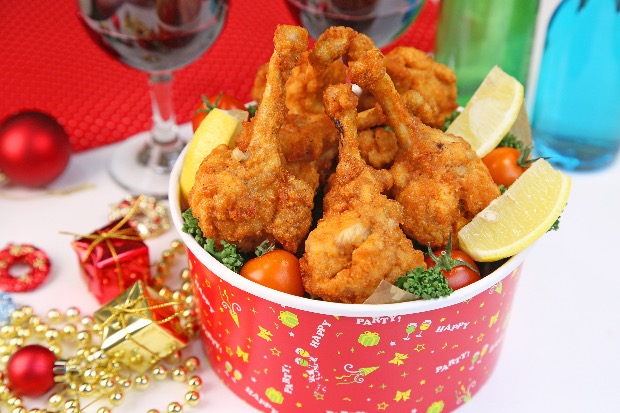
One of Japan’s most famous modern Christmas traditions started not in folklore or religion, but in a clever 1970s marketing campaign. In 1970, Takeshi Okawara, the manager of Japan's first KFC, started advertising fried chicken "party barrels" as a Christmas meal. An urban legend (encouraged by KFC advertisements) claimed that foreigners in Japan resorted to fried chicken when they couldn’t find turkey, and whether fact or clever fiction, the idea stuck.
Then, in 1974, KFC’s nationwide Christmas campaign struck gold with the slogan “Kurisumasu ni wa Kentakkii!” (クリスマスにはケンタッキー; “Kentucky for Christmas!”) and eating crispy chicken on Christmas Eve quickly became a new Japanese tradition. Now every Christmas, KFC stores take orders weeks in advance, and long queues outside stores form on Christmas Eve as an estimated 3.6 million Japanese families line up to pick up a party barrel of Kentucky Fried Chicken. Limited-edition Christmas sets, special packaging, and seasonal desserts add to the appeal, and some branches expand their menus specifically for the holiday rush.
🍰 Sweet Traditions: The Christmas Cake
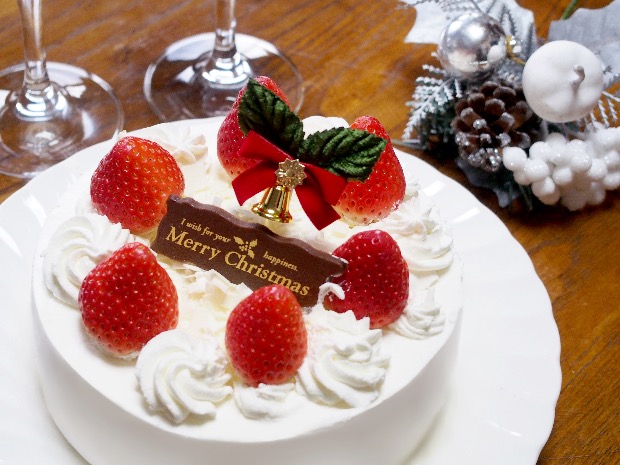
At the center of Japan’s festive sweets sits the unmistakable Christmas cake. Usually a soft, airy shortcake layered with whipped cream and strawberries, this cake symbolized prosperity and recovery, a joyous indulgence after challenging times, quickly cementing its place as an indispensable part of modern Japanese Christmas.
This custom also took off after World War II (the red-and-white cake colors even echo Japan’s flag) and symbolized the nation’s return to prosperity. Department stores and bakeries played a major role in turning this dessert into a nationwide custom through advertising and elaborate displays. The tradition caught on quickly, and today Christmas cakes range from luxury pâtisserie creations to simple convenience-store versions, with many families picking one up to share on Christmas Eve or Christmas Day.
While the strawberry shortcake is the undisputed star, Japan’s holiday sweets stretch far beyond it. Wagashi (traditional Japanese confections) makers create winter-themed confections using mochi, anko (red bean paste), and seasonal fruits, often shaped to reflect the season. Beyond the traditional, many bakeries also roll out special Christmas-themed pastries, cookies, and chocolates, like decorated gingerbread and rich chocolate logs that stand as sophisticated alternatives to the shortcake, a wide array of options to satisfy any sweet tooth!
🌟 Seasonal Glow and Festive Streets
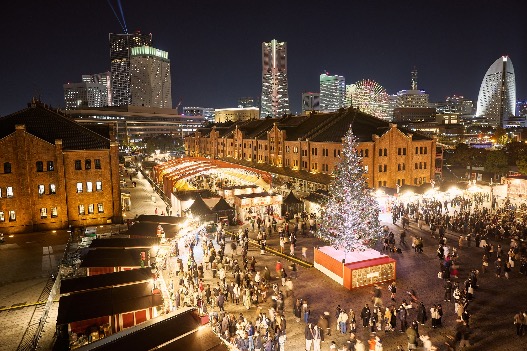
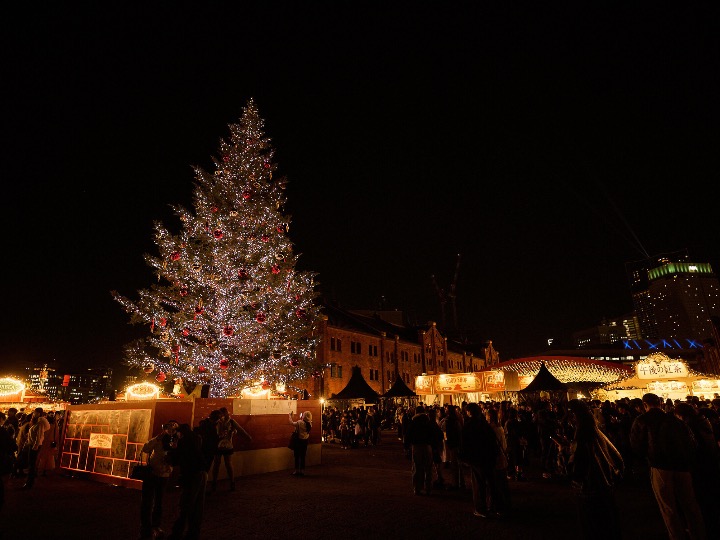
Winter in Japan would feel incomplete without its spectacular illuminations and European-style Christmas markets, both of which have become defining parts of the country’s December atmosphere. The trend of Christmas markets in Japan took off in the early 2000s when Sapporo launched a German-style market in 2002 as part of a sister-city celebration with Munich and soon spread to major cities like Tokyo, Yokohama, and Osaka.
These festive events recreate the atmosphere of a classic German Weihnachtsmarkt with rows of wooden huts selling hot mulled wine and draft beer, grilled sausages, pretzels, and slices of stollen cake, as well as stalls of handcrafted ornaments.
Some well-known examples include the Tokyo Christmas Market (held in central Tokyo), which is backed by the German Embassy and German Tourism Association, and Yokohama’s Red Brick Warehouse, which transforms its harbor front plaza into a winter wonderland each year complete with German-made chalets and classic treats.
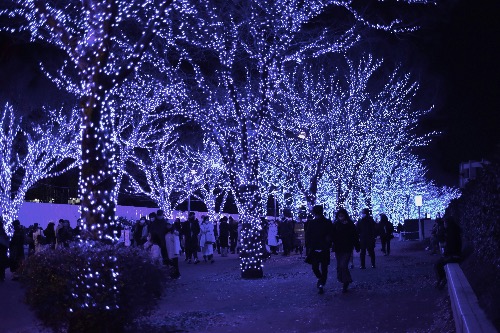
Another highlight of Japanese Christmas is the dazzling winter illuminations. Cities across Japan go all out with elaborate light displays. But rather than simple decorative lighting, Japan also treats winter illuminations as a form of public art, where designers work with color, rhythm, and spatial arrangement in a way closer to installation art. Because of this emphasis on artistry, illuminations in Japan tend to last longer, distinct from Western Christmas lights, and continue well past December 25, often running until February.
🫶 Christmas Eve: Japan’s Romantic “Date Night”
It’s worth noting that Christmas in Japan has a reputation as a couples’ holiday. Rather than a family gathering, Christmas Eve is treated like a romantic date night (in many ways, December 24 becomes Japan’s unofficial second Valentine’s Day). This tradition took form during the economic boom of the 1980s, when television dramas, magazines, and advertising campaigns portrayed December 24 as an upscale date night filled with city lights, restaurant dinners, and gift exchanges.
Pop culture strongly reinforced this image, with media and advertising such as the famous “X’mas Express” commercials by JR Tokai, which used popular songs like Yamashita Tatsuro’s “Christmas Eve” as background music, portraying the night as a glamorous, romantic experience for couples (the song itself has become inseparable from the season and it still returns to Japan’s music charts every December). By the 1990s, Christmas Eve had become associated with romance, rather than a religious or family-centered celebration.
It also led to the popular term kuribocchi (クリぼっち), used to describe spending Christmas alone, a trend that has become more accepted in recent years as many people choose to enjoy the day solo or with friends. While not universal across the country, the idea of Christmas Eve as a romantic occasion remains especially strong in major cities, where commercial districts, department stores, and restaurants continue to cater to couples with themed menus, illumination spots, and seasonal promotions.
Other Christmas Customs in Japan
🎶 Daiku: Beethoven’s Ninth as a December Tradition
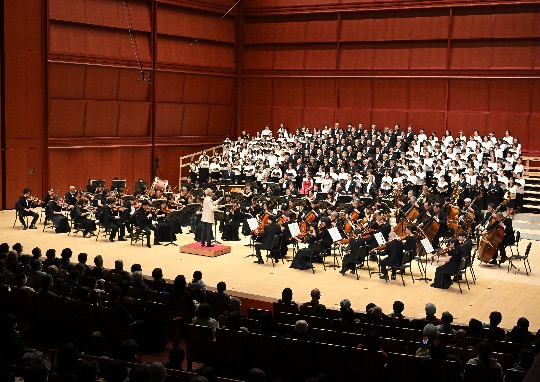
One of Japan’s most distinctive December customs is the widespread performance of Beethoven’s Symphony No. 9, especially the final movement, “Ode to Joy.” Known simply as Daiku (第九, “Number Nine”), the practice began unexpectedly during World War I, when German prisoners of war interned in Tokushima performed the piece for local residents. The concert left a deep cultural impression, and by the mid-20th century, orchestras, choirs, and community groups across the country had adopted Daiku, becoming tied to the holiday and year-end period.
Today, December performances of Symphony No. 9 take place nationwide, ranging from professional concerts to large community choirs. The most famous example is Osaka’s annual 10,000-person choir, where thousands of amateur singers join professionals on stage to perform the choral finale. For many people in Japan, Daiku signals the approach of year’s end in the same way Christmas carols do elsewhere.
🎅🏻 Santa-san and Hoteiosho
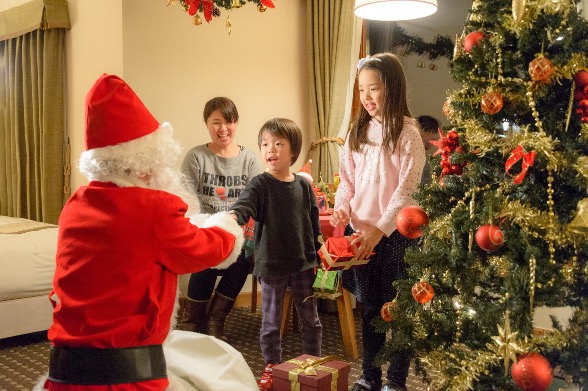
Santa Claus, known in Japan as Santa-san or Santa Ojisan, appears throughout December in decorations, advertisements, shopping malls, and children’s media. Some families with young children celebrate the season by leaving gifts for them to find on Christmas Eve or Christmas morning, becoming like this part of Japan’s broader winter imagery, supported by decades of pop-culture references and commercial campaigns.
Alongside Santa-san, Japan has a figure from Buddhist and East Asian folklore who sometimes enters holiday conversations: Hoteiosho (also Hotei or Laughing Buddha). He is one of the Seven Lucky Gods (Shichifukujin) and is associated with good fortune, generosity, and the protection of children. His rounded figure, smiling expression, and large cloth bag filled with treasures have occasionally drawn comparisons to Santa, and in some regions or pieces of pop culture he is loosely referred to as a Japanese Santa. Traditionally, however, Hoteiosho is linked more closely to the New Year period than to Christmas itself, since his blessings relate to well-being and luck for the year ahead.
🎁 Modest Gift Exchanges
Another widespread custom in Japan during December is the exchange of casual gifts. These are not the elaborate presents associated with Western Christmas, but friendly tokens shared among classmates, coworkers, or close friends. Convenience stores and department shops stock seasonal snacks, limited-edition sweets, and inexpensive novelty items, many designed specifically with this kind of casual gifting in mind.
These small exchanges often happen spontaneously rather than through organized events. In offices, a colleague might bring a box of holiday chocolates, or friends may swap simple items as a gesture of appreciation. The emphasis stays on convenience and thoughtfulness rather than obligation.

Christmas and Religion in Japan
Although Christmas is widely celebrated across Japan, its religious roots are observed by a very small portion of the population. Christians make up roughly 1 to 1.5% of Japan’s residents; for this minority, Christmas retains its original meaning, and churches across the country hold Christmas Eve and Christmas Day services. In metropolitan areas like Tokyo and Yokohama, congregations include both Japanese Christians and international residents, so many churches offer bilingual or English-language masses. These gatherings are generally modest in scale compared to Western countries, but they provide an option for those who celebrate Christmas as a religious holiday.
In regions with historical Christian communities, such as Nagasaki, Christmas has a longer lineage connected to hidden Christian traditions that survived centuries of suppression. Today, churches in these areas hold candlelight services and small community events, bringing together local history with contemporary Christian practice. Despite these pockets of tradition, religious celebrations take place on a more low-key level in comparison with the much broader cultural and commercial version of Christmas that has developed over the past century.

A Season Celebrated in Japan’s Own Style
Christmas in Japan follows its own ways, shaped by local customs, commercial trends, and the way people choose to spend the season. Many treat it as an optional occasion, enjoying it in ways that fit their routines, families, or local communities, and how the holiday is celebrated remains flexible and personal: some people enjoy illuminations or a Christmas cake, others spend the evening with partners or friends, and many simply treat it as a regular winter day.
These varied practices show how Christmas evolved into a culturally specific event rather than a direct Western import. With a better sense of how these traditions emerged and why they continue today, it becomes easier to see Christmas in Japan not as an imitation of Western customs but as a celebration with its own context and meanings across the country.
🎄 Experience Japan from the Inside
Reading about these customs gives only part of the picture, experiencing them from the inside brings a completely different perspective! Through an internship in Japan, you can not only see but experience for yourself how these types of traditions influence work and life in Japan. If this feels like the right next step, join the program or reach out to us to begin planning your internship journey in Japan!


