


Cherry Blossom Forecast in Japan and Top Sakura Spots
Cherry blossom season is one of the most anticipated times of year in Japan, marking the transition from winter to spring. As sakura bloom from south to north, people across the country follow forecasts closely to plan their hanami outings.
Beyond their visual appeal, cherry blossoms also hold strong cultural significance and are tied to centuries-old traditions. This guide explains when sakura bloom, what they represent, and some of the places to see them in Tokyo and across Japan.
Cherry Blossom Forecast: When Sakura Bloom in Japan
Every spring, Japan follows the progress of cherry blossoms through the sakura forecast, commonly known as the sakura zensen (桜前線), or “cherry blossom front.” This forecast tracks the gradual movement of blooming across the country: it starts in the subtropical climate of Okinawa and Kyūshū; then the line travels north through Honshū and finally reaches Hokkaidō.
You can visualize this as a wave of pink moving from the warm south to the cooler north. Elevation also plays a role; trees in mountainous areas bloom later than those in coastal cities. Media outlets, travel websites, and weather agencies publish regular updates so residents and travelers can plan when and where to see the blossoms at their peak.
Understanding Bloom Stages
Two terms are commonly used when discussing cherry blossom timing:
• Kaika (開花) refers to the official opening of the first blossoms (about 5–6 blooms) on a tree. This marks the beginning of the cherry blossom season in a given area.
• Mankai (満開) refers to full bloom, when at least about 80% of the flowers on the tree have opened; this is typically considered the best time for hanami.
Once in bloom, cherry trees usually flower for around 10 to 14 days in total, with the peak bloom lasting roughly one week, weather permitting.
Typical Bloom Periods Across Japan
Although the exact timing varies each year, the cherry blossom season generally follows a predictable pattern as it moves from south to north:
• Kyūshū and southern Japan: late March
• Tokyo and central Japan: late March to early April
• Tohoku region: mid-April
• Hokkaidō: late April to early May
Because Japan stretches over a long north-to-south distance, this progression allows travelers to potentially follow the bloom for several weeks across different regions.
Why Timing Can Change Each Year
Cherry blossom timing depends heavily on temperature patterns during winter and early spring, and rising global temperatures are gradually shifting these traditional patterns, with a trend toward earlier blooming than historical averages.
Warmer temperatures can cause blossoms to appear earlier, while colder weather may delay the bloom. Sudden warm spells can accelerate the process, while storms or strong winds during peak bloom can cause petals to fall quicklier.
For this reason, forecasts are updated frequently as the season approaches. Reliable information is published annually by the Japan Meteorological Agency as well as travel and weather services such as Japan Guide and the Japan National Tourism Organization (JNTO), which provide updated bloom predictions and regional maps to help visitors plan their hanami experience.

The Cultural Meaning of Cherry Blossoms and Hanami
Cherry blossoms are not only admired for their beauty; they also carry rich cultural meaning in Japan. For centuries, sakura have been associated with ideas about time, nature, and human life, making them one of the most powerful seasonal symbols in Japanese culture.
Symbolism of Sakura
One of the concepts most closely linked to cherry blossoms is mono no aware (物の哀れ), the awareness of impermanence and the appreciation that comes from recognizing that beauty does not last forever. Because sakura bloom for only a short time before their petals fall, they are often seen as a reminder of the fleeting nature of life, and that something is more precious because it lasts only briefly.
Cherry blossoms are also associated with renewal and new beginnings, as their blooming coincides with the arrival of spring and, in modern Japan, the start of the school and fiscal year in April.
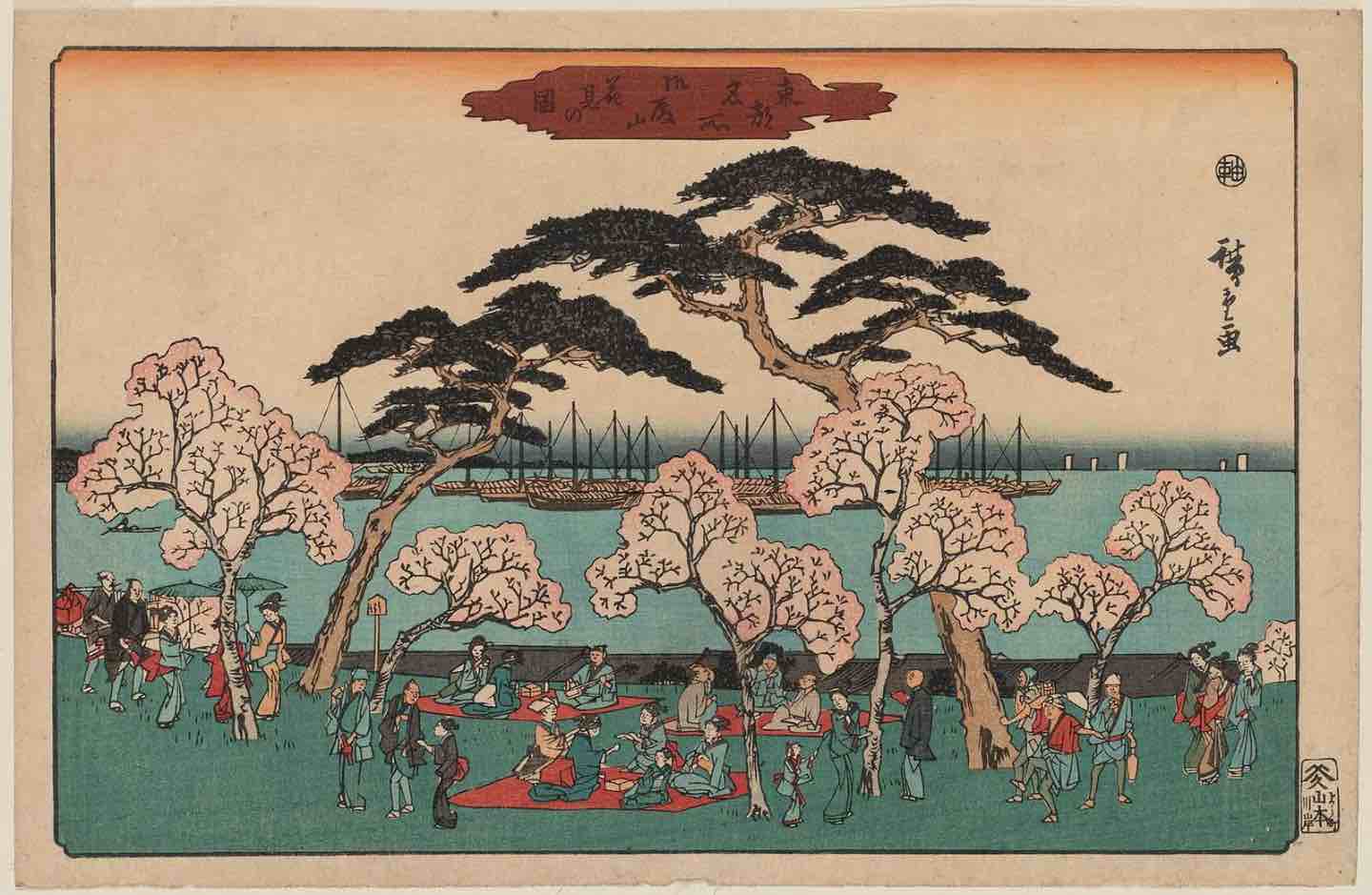
Historical Background
Flower viewing in Japan has a long history, originally centered on plum blossoms (ume) during the Nara period (710–794). By the Heian period (794–1185), cherry blossoms had become the dominant symbol of spring, appearing widely in poetry, art, and seasonal gatherings.
Members of the imperial court held blossom-viewing events where they composed poetry and enjoyed food and drinks of the seasons. These gatherings were recorded in classical literature, where flowers often symbolized the passage of time and emotional reflection.
The Tradition of Hanami
The custom of flower viewing, known as hanami (花見), became popular among the general public during the Edo period (1603–1868). Shōgun Tokugawa Yoshimune is often credited with encouraging the planting of cherry trees in public areas, making it easier for people across social classes to enjoy the blossoms.
Today, hanami remains one of Japan’s most recognizable traditions where people gather in parks, riverbanks, and temple grounds to enjoy picnics under the blossoms, often with friends, family, or coworkers.

Best Cherry Blossom Spots in Tokyo
Shinjuku Gyoen National Garden
🌸 Best viewing: Late March – early April, with some trees blooming into mid-April
📍Map
One of Tokyo’s most famous sakura parks, Shinjuku Gyoen boasts over 1,000 cherry trees representing around 70 varieties, spread throughout its Japanese, English, and French gardens. Large open lawns also provide plenty of space for hanami picnics. Because these varieties bloom at slightly different times, the viewing period here often lasts longer than at other locations.
❗️To prevent overcrowding, visitors must make a reservation in advance to enter the park on March 28 – 29 and on April 4 – 5 between 10AM–4PM.

Ueno Park
🌸 Best viewing: Late March – Early April
📍Map
Ueno Park is one of Tokyo’s most famous and lively cherry blossoms viewing spots. The park is home to around 1,000 cherry trees, many of them lining the central pathways and creating a tunnel of blossoms during peak bloom. Because of its central location and large number of trees, it attracts large crowds every spring.
The annual Ueno Sakura Festival takes place throughout the park from March 14 to April 5, with food stalls, events, and many visitors gathering for hanami picnics beneath the trees.
In the evenings, the park offers nighttime cherry blossom viewing (yozakura); this year, decorative lanterns will light the main pathways from March 14 to April 5 (5PM–11PM). Additional illumination around Shinobazu Pond will take place from March 20 to April 19, typically from 5PM to 8PM or 9PM, depending on the day.

Sumida Park
🌸 Best viewing: Late March – Early April
📍Map
More than 300 cherry trees planted under the rule of shōgun Tokugawa Yoshimune, form a cherry blossom avenue that extends for roughly 1 km from Azuma Bridge to Sakura Bridge along both sides of the Sumida River, offering cherry blossom viewing with Tokyo Skytree visible in the background.
In addition to walking along the riverside paths, visitors can also enjoy the blossoms from a different perspective by taking traditional sightseeing yakatabune boats that cruise along the Sumida River.
During sakura season, the park is illuminated at night. This year, illumination is scheduled from March 15 to April 5 on the west side of the river (Asakusa side) and from March 20 to April 5 on the east side (Mukōjima/Skytree side), from 6:30PM to 9PM, during the Sumida River Cherry Blossom Festival, allowing visitors to experience the blossoms after sunset.

Chidorigafuchi
🌸 Best viewing: Late March – Early April
📍Map
Chidorigafuchi, located along the northwest moat of the Imperial Palace, is widely considered one of the most scenic cherry blossom spots in Tokyo. The pathway follows the edge of the moat for several hundred meters, with hundreds of cherry trees arching over the water and creating a tunnel of blossoms during peak bloom.
One of the most popular ways to enjoy the view is by renting small rowboats at the nearby Chidorigafuchi Boat Pier, allowing visitors to see the blossoms reflected in the moat from the water. This is especially beautiful when the petals begin to fall and cover the moat’s surface in a pink carpet.
In the evenings, Chidorigafuchi is illuminated as part of the Chiyoda Sakura Festival, scheduled from March 26 to April 6, from 6PM to 9PM.

Best Cherry Blossom Spots in Japan
Mount Yoshino (Nara)
🌸 Best viewing: Early to mid-April
📍Map
Mount Yoshino is widely regarded as one of Japan’s most famous cherry blossom destinations. Located in Nara Prefecture, the mountain is covered with around 30,000 cherry trees planted across its slopes, with some of the oldest trees thought to be over 1,300 years old.
These trees are distributed across four main areas of the mountain (lower, middle, upper, and inner), and because they bloom gradually from the lower slopes to the summit, the viewing season often lasts longer than in many other locations.
Walking trails connect the different sections of Yoshino, allowing visitors to move through forests of blossoms while enjoying views of the surrounding mountains and valleys. During peak bloom, the entire mountain appears almost completely covered in soft pink, making it one of the most iconic sakura scenes in the country.

Himeji Castle (Hyōgo)
🌸 Best viewing: Early April
📍Map
One of Japan’s best-preserved original castles and a UNESCO World Heritage Site, Himeji Castle, also known as the “White Heron Castle,” is a popular cherry blossom destination.
Visitors can walk through the castle park and surrounding areas, where the blossoms frame views of the main keep from different angles. During the season, a cherry blossom illumination event is held from March 27 to April 5, with evening illuminations from 6:30PM to 9PM, allowing visitors to enjoy nighttime cherry blossom viewing within the castle grounds.

Hirosaki Castle (Aomori)
🌸 Best viewing: Late April – early May
📍Map
Hirosaki Castle is one of Japan’s most celebrated cherry blossom destinations, known for its over 2,500 cherry trees and carefully maintained park grounds. During peak bloom, visitors can walk through cherry blossom tunnels and see the castle’s moats covered with fallen petals, creating a distinctive “flower carpet” effect.
The park offers spacious picnic areas, making it a popular spot for hanami, and visitors can also rent rowing boats to enjoy views of the blossoms from the water. A unique option available during the season is the cherry blossom picnic service, where, by reserving, staff prepare food, drinks, and seating, allowing visitors to enjoy hanami without needing to bring or set up anything themselves.
The annual Hirosaki Cherry Blossom Festival is held from April 17 to May 5, with a variety of stalls and activities, extended opening hours, and night illuminations from sunset until 10PM.

Gongendo Park (Saitama)
🌸 Best viewing: Early April
📍Map
Located about an hour north of Tokyo, Gongendo Park is known for its long row of around 1,000 cherry trees stretching for about 1 km, forming a continuous tunnel of blossoms along the riverbank known in Japanese as Sakura Tsutsumi.
What makes the scenery even more spectacular is the contrast between the soft pink cherry blossoms and the bright yellow nanohana (rapeseed flowers) that bloom at the same time in the surrounding fields. Wide walking paths and open spaces make it suitable for both strolling and hanami picnics.

The Beauty of the Fleeting
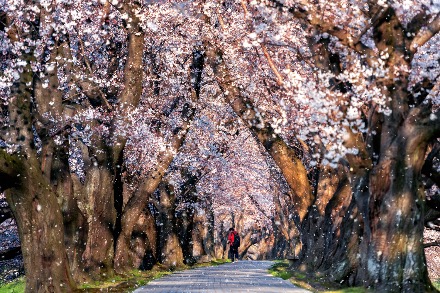
Arriving each year, sometimes by just a few days or weeks, cherry blossom season remains one of the most anticipated times in Japan. For a short period, people gather to appreciate sakura’s ephemeral but striking beauty.
This unpredictability adds to the awareness of how temporary the blossoms are, encouraging people to slow down and take in the moment before it is gone. As weather patterns become less predictable with changing climates, this sense of observing something fleeting becomes even more central to how the season is experienced.
🌸 The Time Is Now!
Cherry blossom season is a reminder of timing and change, but it can also be a moment to start something new. Spending that time in Japan while gaining experience can add more value to your stay. If you’re considering it, an internship in Japan is one option. Join the program or reach out to us to explore internships in Japan that match your goals!


